Por qué Together.ai cambió la forma en que hago benchmarking de agentes de radiología
Antes de poder entrenar un modelo, tienes que saber cuál modelo merece ser entrenado.
Esa frase suena obvia, pero en la práctica es la parte que más se ignora.
Cuando empecé a construir agentes de control de calidad para reportes radiológicos, cometí el error clásico: elegí un modelo por reputación, lo integré directamente al flujo clínico, y asumí que funcionaría bien. Funcionó… más o menos. El problema es que "más o menos" no es un estándar aceptable cuando el agente tiene que detectar si el reporte menciona un ovario en un paciente masculino o si una lesión hepática de 28 mm quedó fuera de la conclusión.
Necesitaba benchmarking real. Y para eso necesitaba poder llamar a varios modelos, con casos clínicos reales, sin armar infraestructura desde cero para cada uno.
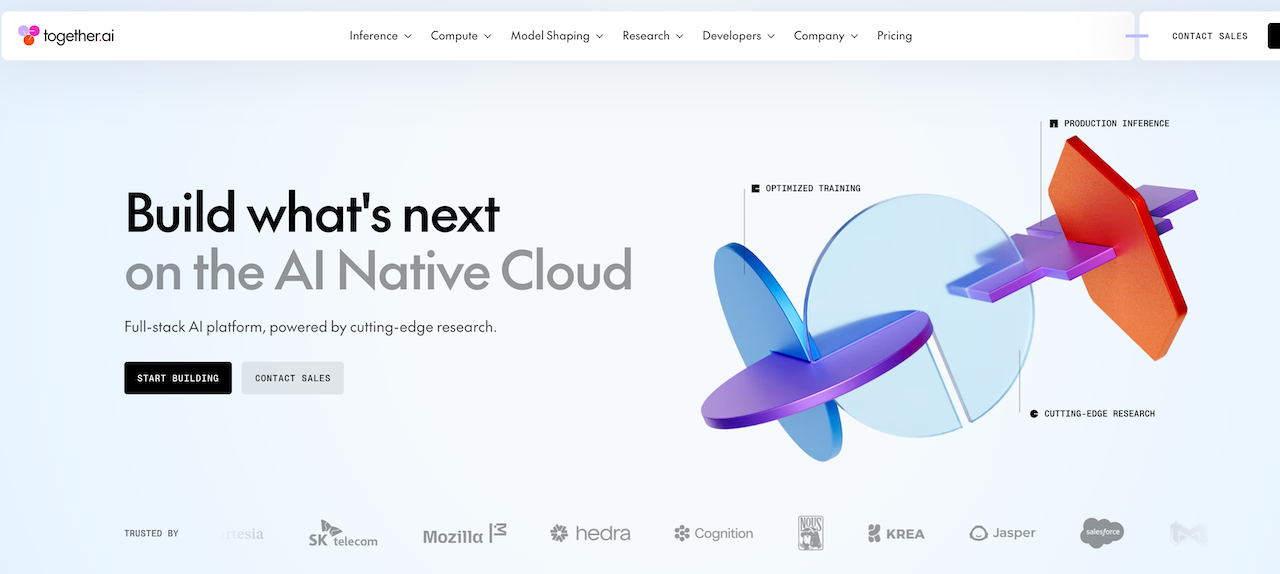
Ahí entró Together.ai.
El problema con el benchmarking de modelos en radiología
Comparar modelos de lenguaje para casos clínicos no es lo mismo que comparar chatbots generales. En radiología, los errores tienen categorías, severidades y consecuencias clínicas. Un error crítico —como confundir lateralidad o reportar un órgano que fue extirpado quirúrgicamente— no es equivalente a un error menor de formato.
Para hacer un benchmark útil necesitas:
- Casos clínicos con errores conocidos e intencionados (ground truth)
- Un prompt de sistema que defina reglas de evaluación clínica precisas
- Llamar a múltiples modelos con los mismos casos
- Medir precisión, recall y F1 por modelo, no solo "la respuesta suena bien"
- Calcular latencia y costo real para poder tomar decisiones de producción
Nada de esto requiere un modelo propietario. Pero sí requiere acceso fácil a múltiples modelos con una API unificada.
Together.ai: una API, docenas de modelos
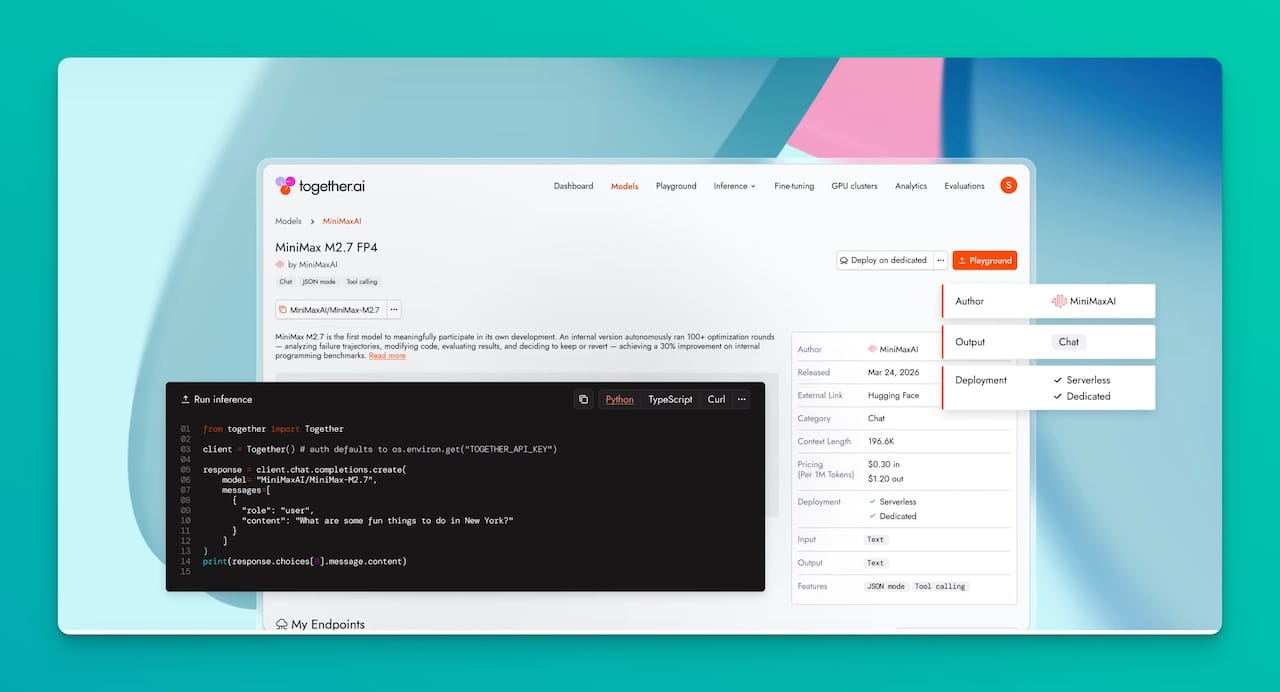
Together.ai es una plataforma de inferencia serverless que da acceso a modelos open-source de alto rendimiento —GPT-OSS, Mistral, LLaMA, Qwen, DeepSeek y muchos más— bajo una sola API compatible con el estándar OpenAI.
Lo que eso significa en la práctica: cambias el nombre del modelo en una línea de código y ya estás probando otro.
No hay que crear cuentas separadas, manejar diferentes formatos de respuesta, ni lidiar con SDKs distintos. El endpoint es el mismo. La estructura del request es la misma. Solo cambia el model.
Para benchmarking, eso es transformador.
Cómo lo usé en la práctica
Construí un benchmark con cinco casos clínicos de radiología, cada uno con errores conocidos clasificados según 24 reglas de control de calidad: errores críticos (órgano incorrecto para el sexo del paciente, lateralidad errónea, hallazgo no mencionado en la conclusión), errores mayores (mediciones vacías, lesión sin dimensiones, ausencia de contraste), y errores menores (sin mención de portabilidad, sin dosis de radiación).
El agente recibe cada reporte, lo analiza con el prompt de sistema, y devuelve un JSON estructurado con los errores detectados, severidad, evidencia textual y sugerencia de corrección.
Con Together.ai pude correr ese benchmark contra tres modelos —un modelo de 20B parámetros, uno de 120B y Mistral 3 14B— en paralelo, sobre los mismos cinco casos, midiendo:
- F1 score por caso y promedio global
- Latencia media y mínima
- Costo real por 800 estudios al mes (volumen representativo de una clínica mediana en Latinoamérica)
Los resultados mostraron diferencias significativas entre modelos que ningún "vistazo subjetivo" habría revelado: el modelo más costoso no era el más preciso. El más rápido tenía un recall aceptable para errores críticos pero fallaba en errores mayores. Y el más económico tenía una relación costo-F1 que lo hacía candidato serio para producción.
Sin Together.ai, esa comparación habría tomado semanas de integración. Con Together.ai, tomó horas.
Por qué el modelo serverless importa
La arquitectura serverless de Together.ai no es solo un detalle técnico. Tiene implicaciones concretas para proyectos clínicos:
Sin costo de infraestructura. No hay servidores que administrar, ni GPUs que alquilar, ni Docker containers que mantener para los modelos de inferencia. Pagas por token consumido, nada más.
Escalabilidad instantánea. Si mañana quieres correr el mismo benchmark con 500 casos en lugar de 5, la plataforma lo absorbe sin que toques nada. Para validaciones clínicas más amplias —que eventualmente son necesarias antes de producción— eso es crítico.
Ciclos de iteración cortos. En desarrollo de agentes clínicos, el ciclo es: hipótesis → prueba → ajuste de prompt → prueba → evaluación. Cada iteración que tarda horas en lugar de días acelera el aprendizaje clínico real.
Base para fine-tuning. Este es el punto que más me interesa. El benchmarking no es el destino; es el primer paso. Una vez que sabes qué modelo base tiene el mejor perfil para tu caso de uso, puedes tomar los mismos casos del benchmark —con sus errores conocidos y sus respuestas JSON correctas— y usarlos como datos de entrenamiento para fine-tuning. Together.ai también ofrece fine-tuning sobre sus modelos base. Es el mismo ecosistema, el mismo formato, la misma API.
Lo que aprendí sobre elegir modelos para agentes clínicos : F1 no es fórmula 1!
Después de correr benchmarks con varios modelos y casos, hay tres cosas que cambié en cómo pienso la selección:
El F1 importa más que el score subjetivo. Los modelos tienden a dar scores de 70-80/100 a casi cualquier reporte, incluso con errores graves. Lo que diferencia modelos es la capacidad de detectar errores específicos con alta precisión. Un modelo que detecta 7 de 10 errores esperados con 0 falsos positivos es mejor que uno que detecta 10 con 4 falsos positivos.
La latencia tiene contexto clínico. En un flujo de validación asincrónica, 3 segundos de latencia no importan. En un agente que revisa reportes en tiempo real mientras el radiólogo dicta, sí importa. Mide latencia con el contexto del flujo clínico en mente.
El siguiente paso: fine-tuning con datos propios
El benchmark no es el producto final. Es la selección del candidato.
Una vez identificado el modelo base con mejor perfil para detección de errores en reportes radiológicos, el siguiente paso es fine-tuning con casos propios del contexto latinoamericano: terminología clínica en español, patrones locales de dictado, errores frecuentes en la práctica real de radiología colombiana y centroamericana.
Together.ai facilita exactamente eso: el mismo ecosistema donde hiciste el benchmark es donde puedes entrenar. Los datos que generaste en el proceso de evaluación —reportes con errores conocidos, respuestas JSON correctas, clasificaciones clínicas— son los datos de entrenamiento.
Es un flujo coherente de principio a fin. Bienvenidos a la F1!
Miguel Angarita es radiólogo e implementador de IA clínica. Trabaja con clínicas y hospitales en Colombia y Centroamérica en la integración práctica de agentes de inteligencia artificial en flujos radiológicos. Es fundador de AngaritaRad.
Why Together.ai changed the way I benchmark radiology agents
Before you can train a model, you have to know which model deserves to be trained.
That sounds obvious, but in practice it's the most ignored part.
When I started building quality-control agents for radiology reports, I made the classic mistake: I picked a model by reputation, plugged it straight into the clinical workflow, and assumed it would work well. It worked... more or less. The problem is that "more or less" isn't an acceptable standard when the agent has to detect whether a report mentions an ovary in a male patient, or whether a 28 mm liver lesion was left out of the impression.
I needed real benchmarking. And for that I needed to call several models, with real clinical cases, without building infrastructure from scratch for each one.
That's where Together.ai came in.
The problem with benchmarking models in radiology
Comparing language models on clinical cases isn't the same as comparing general chatbots. In radiology, errors have categories, severities, and clinical consequences. A critical error, like getting laterality wrong or reporting an organ that was surgically removed, isn't equivalent to a minor formatting error.
To build a useful benchmark you need:
- Clinical cases with known, deliberately planted errors (ground truth)
- A system prompt that defines precise clinical evaluation rules
- To call multiple models with the same cases
- To measure precision, recall, and F1 per model, not just "the answer sounds good"
- To calculate real latency and cost so you can make production decisions
None of this requires a proprietary model. But it does require easy access to multiple models through a unified API.
Together.ai: one API, dozens of models
Together.ai is a serverless inference platform that gives you access to high-performance open-source models (GPT-OSS, Mistral, LLaMA, Qwen, DeepSeek, and many more) through a single OpenAI-compatible API.
What that means in practice: you change the model name in one line of code and you're testing another one.
No separate accounts, no different response formats, no juggling different SDKs. The endpoint is the same. The request structure is the same. Only the model changes.
For benchmarking, that's transformative.
How I used it in practice
I built a benchmark with five radiology clinical cases, each with known errors classified under 24 quality-control rules: critical errors (wrong organ for the patient's sex, wrong laterality, a finding not mentioned in the impression), major errors (empty measurements, a lesion without dimensions, missing contrast), and minor errors (no mention of portable technique, no radiation dose).
The agent receives each report, analyzes it with the system prompt, and returns structured JSON with the detected errors, severity, textual evidence, and a suggested correction.
With Together.ai I could run that benchmark against three models (a 20B-parameter model, a 120B model, and Mistral 3 14B) in parallel, on the same five cases, measuring:
- F1 score per case and overall average
- Latency, average and minimum
- Real cost per 800 studies a month (a representative volume for a mid-sized clinic in Latin America)
The results showed significant differences between models that no "subjective glance" would have revealed: the most expensive model wasn't the most accurate. The fastest had acceptable recall for critical errors but failed on major errors. And the cheapest had a cost-to-F1 ratio that made it a serious candidate for production.
Without Together.ai, that comparison would have taken weeks of integration. With Together.ai, it took hours.
Why the serverless model matters
Together.ai's serverless architecture isn't just a technical detail. It has concrete implications for clinical projects:
No infrastructure cost. No servers to manage, no GPUs to rent, no Docker containers to maintain for inference models. You pay per token consumed, nothing more.
Instant scalability. If tomorrow you want to run the same benchmark with 500 cases instead of 5, the platform absorbs it without you touching anything. For broader clinical validations, which are eventually needed before production, that's critical.
Short iteration cycles. In clinical agent development, the cycle is: hypothesis → test → prompt tweak → test → evaluation. Every iteration that takes hours instead of days speeds up real clinical learning.
A foundation for fine-tuning. This is the point that interests me most. Benchmarking isn't the destination; it's the first step. Once you know which base model has the best profile for your use case, you can take the same benchmark cases, with their known errors and correct JSON answers, and use them as fine-tuning data. Together.ai also offers fine-tuning on its base models. Same ecosystem, same format, same API.
What I learned about choosing models for clinical agents: F1 isn't Formula 1!
After running benchmarks with several models and cases, there are three things I changed in how I think about selection:
F1 matters more than the subjective score. Models tend to give scores of 70-80/100 to almost any report, even with serious errors. What sets models apart is the ability to detect specific errors with high precision. A model that detects 7 of 10 expected errors with 0 false positives is better than one that detects 10 with 4 false positives.
Latency has a clinical context. In an asynchronous validation workflow, 3 seconds of latency doesn't matter. In an agent that reviews reports in real time while the radiologist dictates, it does. Measure latency with the clinical workflow in mind.
The next step: fine-tuning with your own data
The benchmark isn't the final product. It's candidate selection.
Once you've identified the base model with the best profile for detecting errors in radiology reports, the next step is fine-tuning with your own cases from the Latin American context: clinical terminology in Spanish, local dictation patterns, and the errors that come up in real radiology practice in Colombia and Central America.
Together.ai makes exactly that easy: the same ecosystem where you ran the benchmark is where you can train. The data you generated during evaluation (reports with known errors, correct JSON answers, clinical classifications) is your training data.
It's a coherent flow from start to finish. Welcome to F1!
Miguel Angarita is a radiologist and clinical AI implementer. He works with clinics and hospitals in Colombia and Central America on the practical integration of AI agents into radiology workflows. He is the founder of AngaritaRad.